EAST ASIAN STUDIES
Culture Projects 2014
JAPANESE LANGUAGE: EVOLUTION AND MODERN DAY
Written Japanese: The Japanese language can be analyzed from both the written and spoken forms. The written form stems clearly from the Chinese Language. The writing system of Japanese extremely complex, utilizing several separate systems. One of the systems in Japan is the kanji, which are about two thousand ideographs borrowed from Chinese. In this system, thousands of characters need to be memorized to obtain literacy, and each individual character can be intricate. However, the other two systems, which are generically called kana, are simpler because they are syllabic. This suits the phonetic structure of the spoken language. Within Kana, Katakana is angular and is used primarily for transcribing words of foreign origin. Hiragana is more cursive, and can be used for grammatical inflections or for writing native Japanese words. Hiragana arose as a cursive abbreviation for the kanji. This was utilized by women, who were excluded from the study of Chinese characters. They used it mostly for poetry, diaries and novels. The Japanese had no writing system prior to the introduction of the Chinese writing system. After introduction of the chinese characters, the elite japanese upper classes utilized the forms. However, over centuries, the chinese characters and loanwords evolved to fit the syntax and phonology of the Japanese spoken language. As a result of this Chinese influence and domestic adaptation, Japanese writing developed into a complex threefold writing system that was not strictly compatible to the phonetic and syllabic patterns of spoken Japanese.
Spoken Japanese: Currently, there is a lack of antropological evidence to difinitively support any linguistic relationships to other East Asian languages. This lack of cultural definition can translate into a crisis of cultural identity. However, some historians and linguists link the spoken Japanese Language to Korean, which is also linguistically classified as an orphan. The reasons for belief that the two languages are linked stems from their grammatical morphology and the phonology. Grammatical issues such as word order are also very similar.
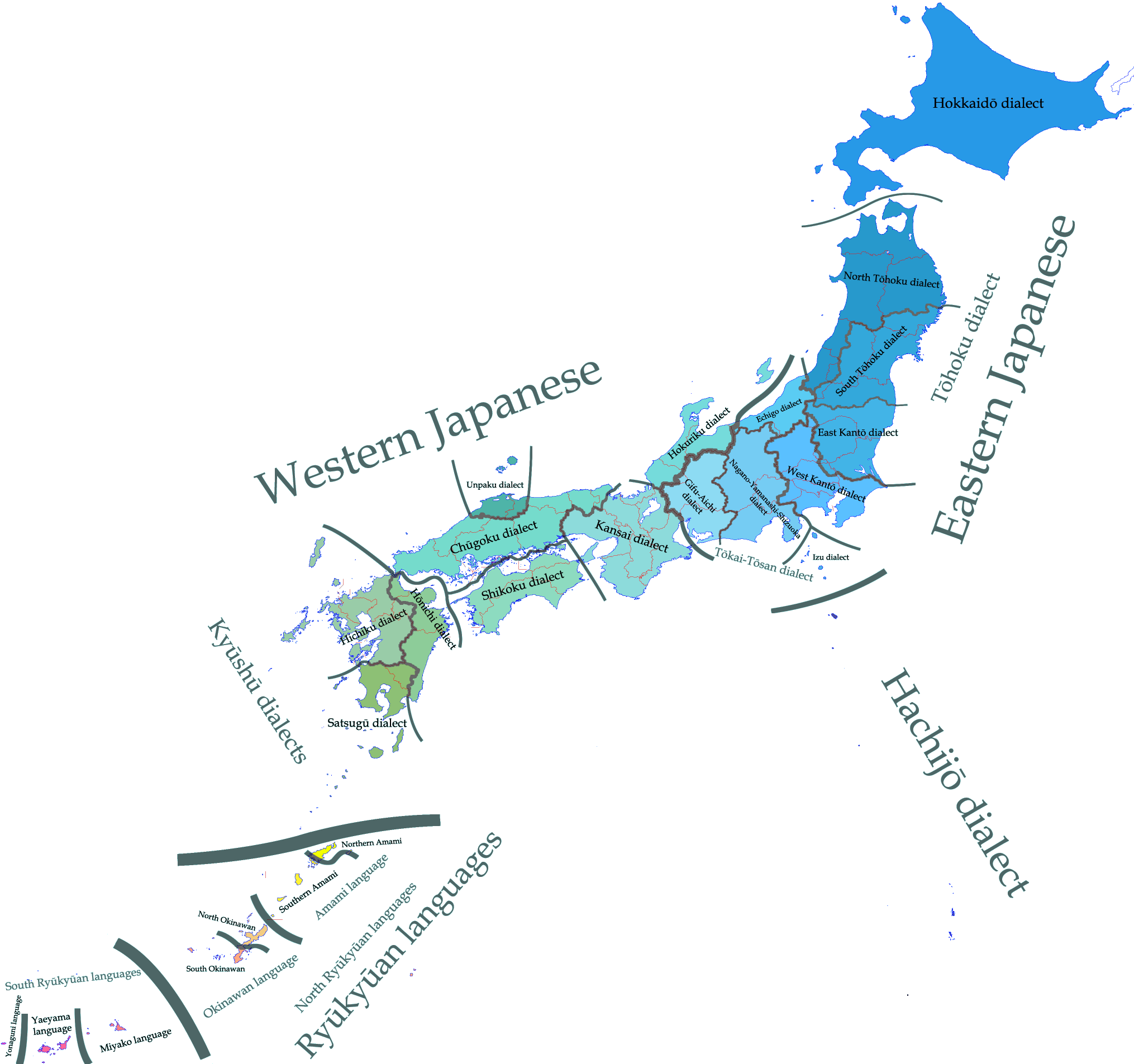
Modern Day: In the modern day, the standard variety of Japanese is the Tokyo dialect, although a number of other dialects can be found. Due to government government's efforts, other dialects are becoming homogenized through standardized education. The dialect is the one used on the television and written in newspapers. Like the chinese system, measures of simplification were undertaken to increase literacy. In 1946, the government implemented a simplification of the writing system which submitted 1,850 kanji and required that publishers limit their useof language to these characters. The government also simplified existing characters. This action reduced the number of kanji necessary for literacy, and simplified existing kanji. The list includes 881 characters for use in gradeschool curriculum. Despite the continued complexity of Japanese writing, Japan maintains one of the highest literacy rates in the world. As Modern Japan has been influenced by western business, innovation, and popular culture, the Japanese language has also witnessed an influx of western loanwords, transliterated into katakana. These include pan (bread), from Portuguese, and arubaito (part-time job), from German arbeiten (to work). But the majority of recent loanwords come from English, especially in the domains of technology and entertainment.