top of page

EAST ASIAN STUDIES
Culture Projects 2014
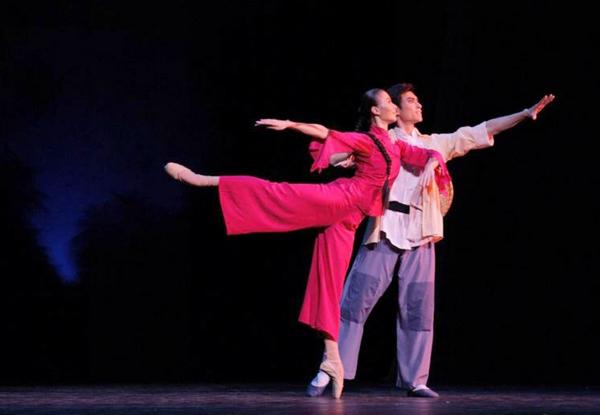
The failure of the Great Leap Forward (1958-62) weakened Mao's position considerably in the Communist Party as factions began to form against him. His sense that the party was shunting him aside probably lies behind his call for a Cultural Revolution for short. Yet, Mao also feared that China would become inegalitarian and that an elite would subvert the party the revolution. To Mao, the revolution had to be a permanent process, constantly kept alive through unending class struggle. Hidden enemies in the party and intellectual circles had to be identified and removed. Essentially, the aim of the Cultural Revolution was to attack the Four Olds-- old ideas, old culture, old customs, and old habits--in order to bring the education, art and literature in line with Communist ideology. Anything that was suspected of being feudal or bourgeois was to be destroyed. However, although many things reminiscent of the West were reviled, the the Chinese relationship with Russia facilitated some introduction of the traditionally western art form of ballet. However, troupes were still limited to a very specific pre-approved repitoire. Some of the more popular works included "The Red Detachment of Women", and "The White Haired Girl".
These works were popular mainly due to Jiang Qing, Mao's wife, who dominated cultural productions during this period. The ideas she espoused through eight "Model Operas" were applied to all areas of the arts. These operas were performed continuously, and attendance was mandatory. Proletarian heroes and heroines were the main characters in each. "The Red Women's Army," a story about women from south China being organized to fight for a new and equal China. Jiang Qing emphasized "Three Stresses" as the guiding principle behind these operas.
For the goups of dancer, musicians, and actors, the lifestyle was harsh and required nomadic tendencies. Many were forced to walk between towns, hauling their instruments and costumes on their backs. After performing in one town the ballerinas would set out on dirt roads to get to the next town by nightfall and the routine would start all over again. For many in the Chinese countryside, this was their first encounter to the traditionally western art form. The ballerina's wore cotton peasant clothes and danced in their hand-crafted ballet slippers that their Russian teachers taught them how to make.
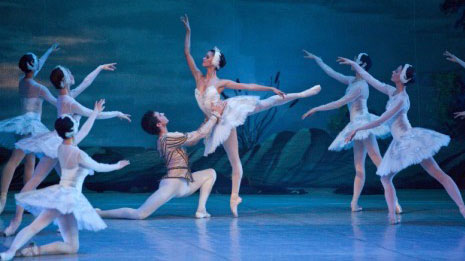
In a more modern day context, the art form that was once new to China now has in the last few decades has seen Chinese ballet troupes growing in international recognition, establishing themselves as highly professional dancers in the worldwide arena by winning major worldwide competitions, including ones in Moscow and Helsinki. Ballet entered China in the 1950s and it originated from its main ally at the time – Russia. At the beginning ballet was represented, and taught solely by Russian choreographers. However, as Sino-Russian relations weakened, Russian teachers began to leave China and were slowly replaced by the Chinese.It is often asked why ballet gained popularity among the Chinese so late. At the start of the 20th century vast numbers of Chinese women used to bind their feet, and this would make it difficult to walk let alone dance as something as complex as ballet with it’s complex intricacy and need for perfect balance. Sure enough, as foot binding disappeared, so ballet began to emerge, rapidly spreading across the country.Another obstacle to adopting ballet in China, that most modest of countries, was the widespread notion that women could not be touched by anyone but their husbands. To limit the impact of touching others, in what can often appear all-too-intimate fashion, ballet in China started with group dances only slowly graduating to paired dancing. At this point, performing world-famous ballets like Swan Lake and Romeo and Juliet finally possible, and Chinese ballet could start its steady advance into the international dance arena.Throughout the existence of ballet in China, the industry has seen numerous difficulties. The National Ballet of China, founded in 1959 continues to be the most famous Chinese ballet troupe in history. It was the first and is currently the only state-run ballet troupe in the country.
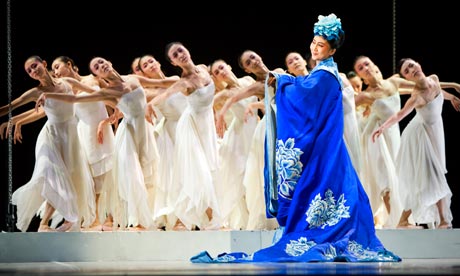
The ballet performs three types of productions: the world’s famous classics, ideologically inspired performances, and showing the most recent ballet productions of western directors.The troupe has been touring around the world and has been to 20 different countries in Europe, America and Asia. The main aim is to promote international connections and cultural interchange.Recently, the troupe increased its recognition with its magnificent showing of the Swan Lake production that gained rave reviews worldwide. The National Ballet of China is incredibly well equipped in terms of resources and even has its own orchestra, a luxury many other troupes cannot affordThere are, of course, many other internationally famous Chinese ballet troupes, all of which are known for their performance technique the world over. These include the Shanghai Ballet, the Classical Ballet of Guangzhou, and the China Liaoning Ballet to name just a few. Not only has China many well-recognized ballet troupes, but it also has established the Annual Beijing International Ballet and Choreography Competition, which attracts many of the finest dancers on the globe.Chinese ballet is a unique mixture of traditional Chinese stories and western style.

bottom of page